Tuesday, 27 January 2015

Fertility problems? Consider egg donation


Thousands of women struggle with infertility every day. In cases where traditional pregnancy with your own eggs is not possible, egg donation is recommended.
Getting pregnant using donated eggs is becoming more and more popular; in fact, it has become the most trusted medical solution for couples that have been trying to conceive a baby for many years with no result.
The procedure of donating eggs has a higher success rate as compared to IVF treatment. The success rate is approximately 75%, which is the result of high-quality egg selection.
                                 
The key participants involved in egg donation therapy include the egg donor that offers the eggs, the egg recipient that receives the best embryos, and the father that provides the sperm.
In many cases, an egg donor may be chosen based on individual characteristics, such as eye, hair, or skin color. In that way, the characteristics of the donor match with the characteristics of the recipient.

The egg donation process consists of four phases.

  1.  In the first phase, ovarian hyperstimulation, donors receive a series of hormonal drugs to produce multiple mature eggs.
  2. During phase two, egg retrieval, mature eggs are removed from the donor through a surgical procedure.
  3. The next step is about fertilizing the donated eggs with the sperm of the future father. 
  4. At the final phase, the resulting embryos are transferred to the receiving woman after a period of five days.
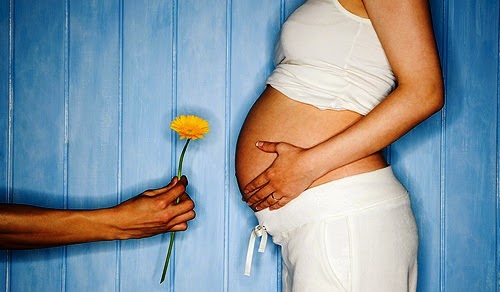
egg donation uk
Egg Donation
To prepare the womb of the recipient to receive the embryos, the future mother is put on hormone replacement therapy (HRT), so the cycles of both the recipient and the egg donor are synchronized.

Throughout the donation procedure, egg donors spend approximately 60 hours in screening, testing, and medical appointments. Women that donate eggs should be between 21 and 30 years old, healthy, and have proven ovarian reserves.

Although egg donation is a wonderful solution for couples wishing to have a child, the legal framework is not so friendly around the world. In a number of European countries, including, Germany and Italy, donating eggs is not legal. That’s why many couples seek help abroad in countries where the procedure is allowed. One of these countries is Cyprus, where couples can find IVF clinics offering high-quality services that result in high pregnancy rates. Moreover, IVF treatment expenses in Cyprus are lower than in the UK. For that reason, many couples from the UK choose to travel abroad to visit an IVF clinic and receive premium quality services for a lower cost.


Interested? Take the next step… dunyaivf.co.uk/egg-donation

Friday, 2 January 2015

What is sperm donation?


Sperm donation is the use of a donor’s sperm to achieve pregnancy otherwise not possible due to male infertility. Assisted Reproductive Techniques (ART) are utilized to fertilize a womans’ eggs with the fertile donor sperm. The couple going through sperm donation seeks the procedure in an IVF clinic. The treatment procedure is similar to normal in vitro fertility treatment where the couple’s own eggs and sperm would be used. The only difference is that the donor’s sperm is used for the fertilization process. 

There are many reasons for male infertility. Usually a simple spermiogram (semen analysis) test can be performed to assess the fertility of the male partner. During the spermiogram test all the important parameters of male fertility are assessed including the sperm cell count, mobility and morphology. 

Why to proceed with Sperm Donation?

sperm donationFor couples going through the sperm donation procedure, the male partner would not be the biological father of the child. However, in most jurisdictions he becomes the legal father. The sperm donors are usually chosen to reflect the physical features of the male partner. However, if the couple has a specific physical feature or academic history preferences, these could normally be catered for. Sperm donors go through very strict selection criteria and only a very few percentage of candidate donors become actual sperm donors.

As part of the selection criteria for sperm donors, screening for genetic disease, chromosomal anomalies, and screening for sexually transmitted disease are performed. Sperm donors could be known or anonymous. However, due to the privacy considerations, anonymous donation is usually preferred. Most respected in vitro fertilization clinics use highly reputable sperm banks to source their sperm for sperm donation. Sperm banks ensure high standards in quality of sperm, greatly enhancing pregnancy success rates for the couple. 

Sperm donation is a great alternative for couples suffering from infertility due to the male partner and allows for pregnancy otherwise not possible. Despite sperm donation being available in most European countries, several countries have restrictive regulations, which in return motivates couples to travel abroad to countries with liberal sperm donation legislation. Sperm donation has become hugely popular for such couples and instead of going through the adoption route; couples with male infertility can now become parents.

Take the next step… dunyaivf.co.uk/sperm-donation

Thursday, 4 December 2014

What is IVF treatment?


As long as humanity has existed, fertility has been a major issue for the medical field. Nowadays, fertility problems affect more than 20% of the population. It is only since the late 1970s that a real chance for conception has arrived, thanks to the development of IVF treatment.

Recommended for..

IVF treatment is in short the in-vitro fertilization of woman's eggs in a laboratory environment.
In-Vitro-Fertilization treatment is recommended to couples that have unprotected sex regularly for longer than a year and have failed to get pregnant. 

ivf treatment


For such couples, several tests are performed to assess their suitability for IVF treatment and especially which of its sub-categories is appropriate for them. The usual examination for women includes an ultrasound check of the ovarian reserves and a test of specific hormones’ levels. 

For men, a spermiogram is conducted to check the sperm count, as well as sperm activity and morphology.Couples that cannot conceive naturally can proceed to the IVF treatment to get pregnant (provided that both partners meet a minimum of certain fertility criteria).


ivfThe process..

The treatment begins with the stimulation of the ovaries, in order for them to produce as many eggs as possible. The stimulation is done with hormone injections and this phase usually lasts from 10 to 14 days. At the end of this period, the mature eggs are collected with a short procedure called Oocyte Pick-Up (OPU). On the same day of the OPU, the sperm is used to fertilize the freshly retrieved eggs (microinjection).

The fertilized eggs are placed in incubators that simulate the human body. These fertilized eggs are then observed for three to five days for their progress: some will develop into viable embryos. The IVF treatment ends and the viable embryos are transferred to the patient’s uterus and from that point on, pregnancy develops naturally.


There are several variations of IVF treatment for cases where fertility problems of one partner (or both) do not allow pregnancy with their own eggs or sperm. In such cases, the treatment is performed using donors’ eggs or sperm (or both). 

contact us on +44 (0) 203 129 5164

Tuesday, 11 November 2014

Why people choose to proceed with egg donation?


  Women whose own eggs do not result in a viable pregnancy choose to proceed with egg donation. Some of the reasons why a woman’s own eggs cannot be used and lot more information about this procedure explained here.


  1. Premature ovarian failure is a leading cause where women stop producing eggs at an early age. There are cases where women go into early menopause in their early 20s. Women suffering from premature ovarian failure can no longer produce healthy eggs that can lead to pregnancy.
  2. Some women are born without ovaries, in which case the only possibility of having a baby is through egg donation.
  3. Women who go through chemotherapy or radiotherapy whose ovaries may have been damaged by the treatment may also need this procedure
  4. Women who produce eggs but have genetic diseases could also choose egg donation to ensure healthy children.
  5. Older women with diminished ovarian reserves or older women who are going through menopause could also become pregnant with egg donation.

Egg Donors

Use of donated eggs results in a highly enhanced pregnancy rates in the region of 75% - 80%. This is due to the egg donors’ proven fertility. Egg donors go through strict screening to ensure that the egg donation will be successful. Most egg donors are below the age of 30 with proven ovarian reserves. They are also screened for genetic diseases and a psychological examination is performed.


The donated eggs can either be provided by an egg donor or by the receiver couple’s friends or family. Depending on the regulation of the country, it can be totally illegal (e.g. Italy, Germany) or the egg donors could be known or anonymous. In anonymous egg donation, the clinic matches the most suitable donor for the couple based on physical characteristics.

Egg donation is performed in a very similar way to normal IVF procedure except that the egg of a donor is used for fertilization. The fertilized egg (embryo) is then transferred to the female who otherwise could not use her own eggs. The pregnancy then develops normally. This greatly enhances the probability of a successful pregnancy.

In addition to traditional couples, recently gay couples have begun to use this procedure and surrogacy to become parents. However, there are only very few countries in the world where allow this in their regulations.
With the huge improvement of success rates, egg donation has really become a great hope for couples wishing to have babies where the woman could otherwise not conceive.

Wednesday, 5 November 2014

What is PGD?


PGD stands for Pre-implantation genetic diagnosis and is a genetic screening that can be performed in IVF treatments. During IVF treatment, the female egg is fertilized with the sperm in a laboratory environment outside the human body. The embryo is usually observed for 5 days for desirable progress before implantation back to
the female uterus. This 5-day period allows a genetic screening to be performed on the embryo in order to determine if the embryo has a genetic disease passed from the parents. This ensures that the embryo selected for transfer is free from genetic disease.
Pgd Treatment

Humans have 23 pairs of chromosomes for a total of 46. 22 of these pairs are called autosomes and are the same for both males and females. The 23rd pair is the gender chromosome, which is different in males and females. Typically, in PGD analysis, 5-9 pairs of chromosomes are analysed for the most common genetic diseases.  This type of genetic testing enables genetic disease like Monosomy, Trisomy, Down’s syndrome to be screened. In some cases, PGD is performed to enable gender selection for families having a preference for a certain baby gender. It is also worth to note that some genetic diseases only affect a certain gender. For example genetic diseases like Duchenne muscular dystrophy or Haemophillia A only affect males, hence making it important to know the baby gender before implantation.

PGD is a general name given for all pre-implantation genetic testing and many other types of genetic testing can also be performed. The type of genetic testing to be performed can be decided based on the family history of genetic diseases.

Only drawbacks of PGD is that during the biopsy phase (a cell has to be removed from the embryo to enable genetic testing) damage could occur inhibiting the development of the embryo. In addition, despite having extremely high success rates (over 99%), the PGD screening may end up being inconclusive.


To summarize, in general families with genetic disorders, older women, women who had several miscarriages and couples wishing to do gender selection usually choose to proceed with PGD. Performing PGD helps avoid abortion when a genetic anomaly is found later in pregnancy.

Sunday, 12 October 2014

What is gender selection?

Sex Selection
Gender selection (sex selection) is the process of choosing the gender of a couple’s baby before pregnancy. In order to make gender selection possible, the couple has to go through IVF treatment. In vitro ferilization treatment is the fertilization of eggs with sperm in a laboratory environment outside the human body. During this treatment, the female ovaries are stimulated to produce as many eggs as possible for the Oocyte Pick Up (OPU) phase. On the OPU day, all the healthy eggs collected from the female are fertilized with the partner’s sperm to create embryos. The embryos are then kept in incubators simulating the human body. The progress of the embryos is observed for 5 days and on the 5th day, the healthy embryos go through genetic testing.

During this genetic testing, chromosome analysis is performed. One of the chromosomes analysed is the XY chromosome. By looking at the XY chromosome, the gender of the embryo can be determined. Only the embryos with the desired gender are then transferred back to the female once the gender of the embryos are known. After the embryo transfer is performed, pregnancy develops normally. In most cases, in addition to the XY chromosome, several other chromosomes are checked to determine if the embryo has any genetic disease like Down’s syndrome or Trisomy. Currently the gender determination screenings have a success rate of 99.9% which make it a very attractive procedure for couples wishing to choose the gender of their baby. 

Gender selection is more popular in some cultures than others where there is a strong preference for a specific gender. However, many couples also do gender selection for family balancing purposes. Regulations regarding gender selection vary between countries. Most countries only allow it for medical reasons (i.e. due to some hereditary disease that passes only to a specific gender).

Gender selection before implantation of the embryo back to the female has the added benefit of avoiding abortions when the mother is not pregnant with the desired gender. 
Only a select few countries in the world freely allow this method causing many couples to travel for this treatment. With the success rates at good clinics being at such high rates and the cost becoming more and more affordable, travelling for gender selection treatment is becoming more and more common.

Thursday, 25 September 2014

Why Do UK Couples Seeking IVF Treatment Travel to North Cyprus?


Despite first IVF babies being born over 30 years ago, IVF treatments have only become mainstream in the last few years. Many UK couples seeking fertility treatment usually try the NHS but a considerable percentage is now looking to go abroad for the treatment. UK couples traditionally prefer Spain for fertility treatments but a significant number have started travelling to a less known destination for IVF treatments: North Cyprus.

The island of Cyprus long known to UK tourists as the ex-colonial sunny holiday destination is now becoming a hot spot for medical fertility tourism. But why do so many British couples travel to North Cyprus to undergo fertility treatment and join it with a holiday?
Yes, Cyprus does offer sandy beaches and year-round sunshine which already make it an attractive destination but people come to North Cyprus for things that are better than or not available in the UK fertility treatment system. The biggest reason is the regulations in the IVF industry. North Cyprus has more liberal IVF regulations compared to the rest of Europe making the industry thrive in this small island.
UK couples choose North Cyprus mainly for egg donation and gender selection procedures. For egg donation, North Cyprus offers a no-wait list, anonymous egg donation program with very reasonable treatment prices. It is a very difficult process for UK couples to go through egg donation in the UK due to the difficulty of finding an egg donor and hence the wait list associated with it. This further delay the couples wish to become parents, motivating them to travel abroad.
Couples willing to travel to North Cyprus can rapidly be matched with a donor and go through the treatment immediately after choosing to come to the island. Therefore instead of going through the long and frustrating process in the UK, the couple can literally achieve pregnancy within a few weeks after choosing the right clinic for them. Also, gender selection is not allowed anywhere in Europe except North Cyprus making the destination attractive for UK patients wishing to do family balancing.
Most UK couples wishing to undergo fertility treatment in North Cyprus spend the preparation phase, called the controlled ovarian hyper-stimulation in the UK, which lasts for 10-14 days. They then travel to North Cyprus and spend only 5-7 days there, which couples see as the perfect opportunity to join a holiday. The nature of IVF treatment is such that very few visits are required to the IVF clinic for a successful treatment procedure.
The highly specialized IVF clinics offer high pregnancy rates, but as with any medical treatment, the patients advised to do their homework before choosing the right clinic for them. With the right clinic, North Cyprus offers excellent value for money for couples seeking fertility treatment abroad.